

Are you building a brand-new office building for your company? It all starts with the foundation, and a strong foundation is the cornerstone of a property. Many business owners may not know that there are different types of foundations for commercial businesses, and each type comes with its own set of pros and cons that are important to understand. Potrykus Construction in Wisconsin is a premier concrete contractor and this post highlights the types of commercial foundations, and explains the differences between slab vs. deep foundations.
Differences Between Slab and Deep Commercial Foundations
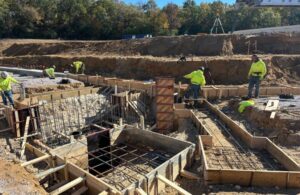
There are two primary types of commercial concrete foundations — slab and deep — that are employed based on the soil around the foundation and the load on the foundation. A better understanding of the differences between these foundations can help you make a more informed decision about the construction of your property, and this overview created by Potrykus Construction will provide additional insight into commercial construction.
Here is a closer look at each type of commercial foundation:
What Is a Slab Concrete Foundation?
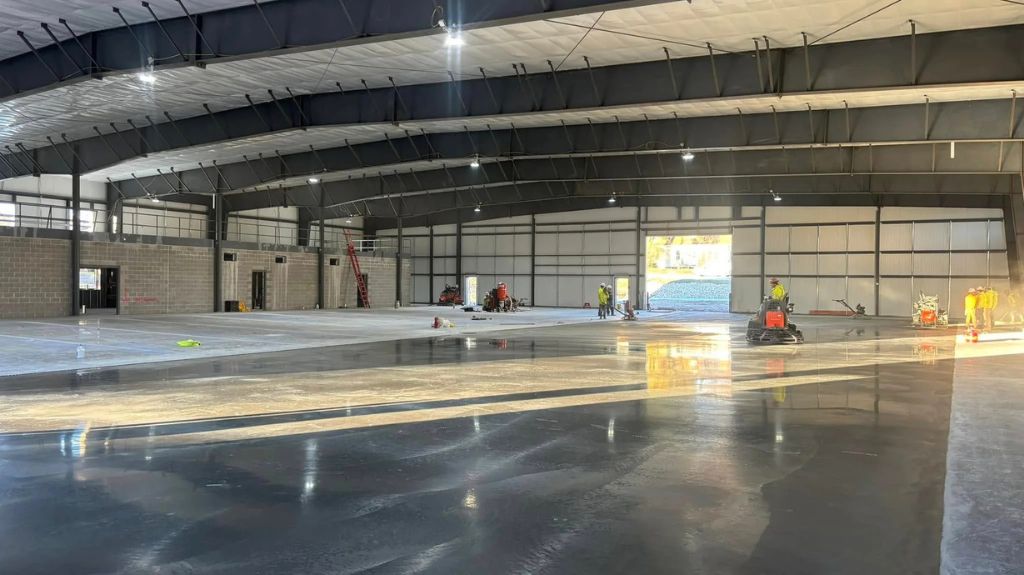
A slab foundation — or shallow foundation — is a reinforced concrete slab that is 4-8 inches thick and is poured onto a prepared gravel base to ensure there is proper drainage. There are different types of slab foundations that can be used in the construction of commercial buildings — slab-on-grade, mat foundations that cover the entire footprint of the structure, and monolithic slabs. A slab foundation is typically employed for smaller commercial projects or sites that have stronger soil.
Pros and Cons of Slab Foundations
Businesses that employ a concrete slab foundation need to understand that there are pros and cons to a slab foundation that influence when the best time to use this type of construction is.
Pros
- Reduced Costs: Slab foundations are the more cost-effective and affordable option because they require less materials and excavation.
- More Energy Efficient: Slab foundations are more energy efficient with no air gap underneath, eliminating the risk of moisture buildup beneath the foundation.
- Faster Construction: Slab foundations are more efficient to build than deep foundations, saving businesses time and money.
- Lower Maintenance: Slab foundations are low maintenance with less risk of mold, mildew, or pests.
Cons
- No Access to Utilities: Slab foundations do not allow owners to access plumbing and electrical utilities beneath the foundation.
- Flood Risk: Slab foundations are built low to ground and can be more prone to flooding in areas that receive heavy rainfall.
- Potential for Cracking: Slab foundations that are not laid correctly can crack when the soil shifts or settles.
What Is a Deep Concrete Foundation?
A deep foundation is exactly that. It is a commercial concrete foundation that goes deep into the ground at depths over 30 meters in some cases to reach stronger soil or bedrock. There are two primary types of deep concrete foundations — caisson and piling — that each provide strength and support for commercial structures. The best and most common uses for deep foundations are skyscrapers, bridges, industrial buildings, or sites with softer soil.
Pros and Cons of Deep Foundations
Like slab foundations, deep foundations have pros and cons that dictate their use by construction companies, and a better understanding of these pros and cons will help keep you informed.
Pros
- Higher Load Ratings: Deep foundations are built to withstand tremendous weight and support massive vertical loads.
- Increased Stability: Deep foundations provide increased stability in areas where there is poor soil, like loose sand or soft clay.
- Erosion Resistant: Deep foundations can withstand extreme conditions where water or flooding erode the soil around the foundation.
- Smaller Footprint: Deep foundations, while they provide superior strength, have a smaller footprint and can require less mass excavation.
Cons
- Higher Costs: Deep foundations employ support materials and support structures that require additional equipment, labor, and materials that drive up costs.
- Complexity and Safety: Deep foundations require additional engineering and inspections that may not be required for a standard slab foundation.
- More Complex Logistics: Deep foundations require extensive machinery and equipment to set the foundation, which leads to more complex logistics
READ MORE: Tips for Planning and Budgeting a Large-Scale Concrete Project
Do you have questions about the construction of your commercial structure? We want to help create a better understanding at Portrykus Construction, and we have created this breakdown of the different types of commercial foundations that explains slab vs. deep foundations.
Contact Potrykus Construction today for more information on our concrete foundation services!