

When planning a commercial construction project, concrete strength is more than just a specification on paper; it’s a critical factor that determines safety, performance, and long-term durability. One of the most common questions property owners, developers, and facility managers ask is: How much weight can concrete actually support?
Understanding concrete load ratings and weight limits helps ensure your building, slab, or foundation is designed to handle real-world demands without cracking, settling, or premature failure.
To read more about concrete services, click here
What Are Concrete Load Ratings?
Concrete load ratings determine the maximum weight and pressure a concrete slab or structure can safely support without sustaining damage. These ratings count for different load types:
- Dead loads: The weight of the structure itself, including slabs, walls, and fixed elements
- Live loads: Variable weight, such as people, vehicles, equipment, and furniture.
Engineers calculate these loads to determine the appropriate slab thickness, reinforcement, and concrete strength needed for a specific commercial application.
How Concrete Strength Affects Weight Limits:
Concrete strength is measured in PSI (pounds per square inch), which reflects its strength after curing, typically measured at 28 days.

Common PSI ranges for commercial projects include:
- 4,000 PSI: Standard for many commercial floors and exterior slabs
- 5,000-6,000 PSI: Used for higher-load applications such as warehouses, loading docks, and industrial facilities
Higher PSI concrete can withstand greater compressive forces, but strength alone doesn’t determine load capacity. Proper design and installation are just as important.
Factors That Influence Concrete Load Capacit
- Concrete Thickness: Thicker slabs distribute weight more effectively and are better for heavier loads, for example:
- Light commercial spaces might use thinner slabs
- Warehouses and industrial facilities usually require thicker concrete to support equipment and storage
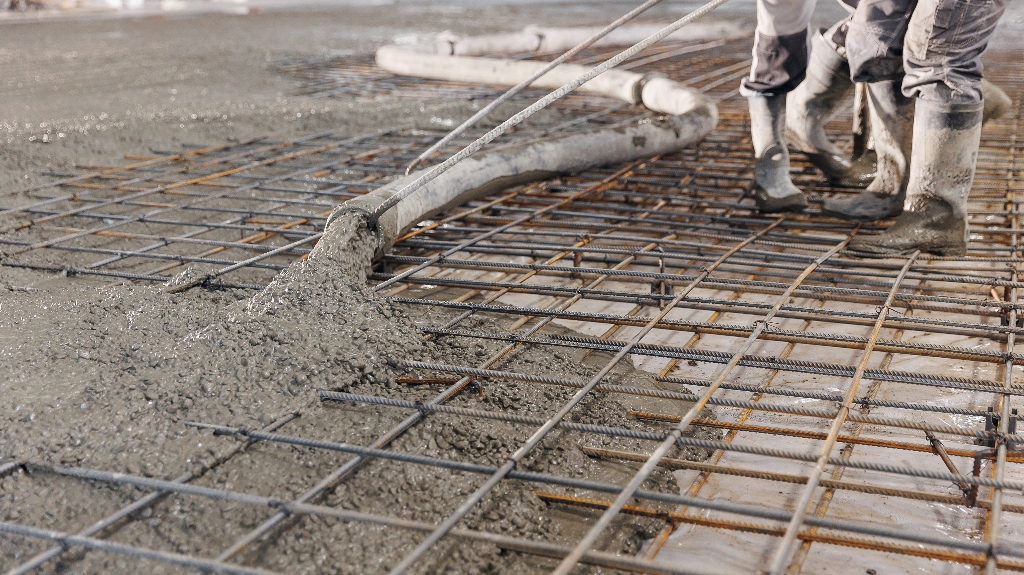
- Reinforcement: Steel reinforcement, such as rebar or wire mesh, significantly enhances concrete’s ability to resist cracking and withstand tensile stress. Reinforcement helps distribute loads evenly and extends the lifespan of the slab.
- Subgrade Preparation: Even some of the strongest concrete can fail if the soil beneath it isn’t properly prepared. A stable compacted subgrade prevents settling and uneven load transfer.
- Load Distribution: Uniformly distributed loads are easier for concrete to support than concentrated point loads. Heavy machinery, columns, or storage racks often require additional reinforcement or thicker slabs to prevent cracking
Plan With Potrykus Construction
At Potrykus Construction, commercial concrete projects are designed with long-term performance in mind. Our team focuses on:
- Proper slab thickness
- Site evaluation and subgrade preparation
- Concrete mixes matched to project load requirements
- Compliance with engineering specifications and industry standards
Understanding load ratings and weight limits is essential for safe, durable commercial construction. Proper planning and installation prevent costly repairs and structural issues down the road.
If you’re planning a commercial concrete project and want confidence in its strength and performance, Potrykus Construction is here to help. Contact our team to discuss your project requirements and ensure your concrete is built to handle the load.