

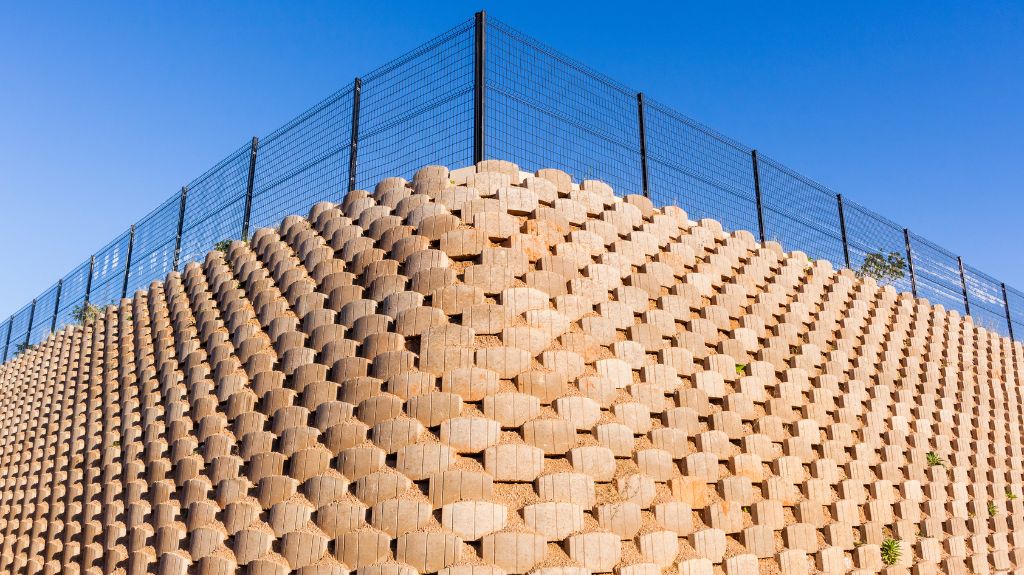
Retaining walls provide more than just an attractive aesthetic when you frequent a business. They provide structural integrity and help ensure that concrete parking lots can withstand the weight of vehicles and water pressure from rain and runoff. The failure or improper installation of a retaining wall can lead to buckled or bulging concrete and soil erosion. Businesses interested in a retaining wall contractor for parking lots need to understand how important it is to prevent soil and drainage failure — and we can help at Potrykus Construction.
4 Primary Causes of Parking Lot Retaining Wall Failure
When parking lot retaining walls are not installed the right way, it can have disastrous consequences that can impact the finances and overall success of a business. For businesses that choose to have a retaining wall installed, it is important to understand what the primary causes of structural failure are and how they can be avoided.
Here is a better look at the primary causes of retaining wall failure:
1. Hydrostatic Pressure
Water and the hydrostatic pressure it can create behind a retaining wall is the number one cause of structural failure. When the water gets trapped behind the retaining wall, the amount of pressure on the wall can double over time. This leads to leaning, bulging, and the eventual collapse of the wall.
2. Improper Drainage
When a parking lot retaining wall is installed, it is critical that the design implements proper drainage to prevent damage to the property. Blocked drainage and weep holes, or missing drain pipes make it difficult for water to escape and can lead to an increase in hydrostatic pressure. It is important that when your parking lot retaining wall is designed and installed, it employs proper drainage to prevent future issues.
3. Excess Loads
The design for a parking lot retaining wall needs to factor in the weight of the vehicles in the lot, to ensure that the retaining wall can withstand the weight and pressure. When you do not factor in the weight of the vehicles and concrete putting pressure on the soil behind the wall, it can lead to bulging and failure of the retaining wall.
4. Poorly Compacted Soil
Loose soil behind a retaining wall is subject to erosion, settlement, and shifting. When the soil backfilled behind a parking lot retaining wall is not properly compacted, the rain, weather, and weight can lead to erosion and settlement that forces a parking lot to settle and buckle, and can force a retaining wall to buckle and fail.
How To Prevent Parking Lot Retaining Wall Failure
When you make the decision to install a parking lot retaining wall, it is important that the design and installation follow specific best practices that will help ensure your project lasts and will not fail over time.
- Engineer Drainage: Drainage needs to be incorporated into the design of your parking lot retaining wall and should feature a 12-inch wide zone of ¾-inch angular crushed stone behind the wall to facilitate drainage.
- French Drain Pipe: A French drain pipe is an important element of retaining wall drainage that is a 4-inch or 6-inch drain pipe wrapped in geotextile fabric that collects and directs water away from the retaining wall.
- Geogrid Reinforcement: To prevent excessive erosion and the issues related to it, the ground around a retaining wall should employ geogrid reinforcement that extends into the slope to create a solid and stable foundation.
- Compacted Soil and Materials: Native soil is prone to erosion and heavy-clay soil can expand and move when water does not drain properly. When installing a parking lot retaining wall, it is essential that the soil and materials used are properly compacted to prevent erosion or movement that can impact the concrete of your parking lot.
- Proper Grading: To manage surface water on a parking lot and prevent collection, it is important that parking lots are properly graded to direct water away from buildings and toward the edge of the retaining wall or any drainage areas.
READ MORE: How Long Does a Commercial Concrete Project Take in Wisconsin?
Are you considering a parking lot retaining wall at your business? Do you have questions about the design or installation? You may want to take a closer look at retaining wall contractors for parking lots and how you can prevent soil and drainage failure. We hope that this overview has helped answer your questions.
Contact Potrykus Construction today for more information on our commercial concrete parking lot services!