

Municipal construction bids in Wisconsin for concrete curbs, gutters, and sidewalks are regulated by the Wisconsin Department of Transportation (WisDOT) and the Standard Specifications for Highway and Structure Construction. These regulations that dictate concrete construction projects are not always easy to understand — but Potrykus Construction may be able to help with an overview of WisDOT standard specs for concrete curb, gutter, and sidewalk, that is a plain-English guide for municipal bids.
What Are the WisDOT Standards for Concrete Curbs, Gutters, and Sidewalks?
Concrete construction companies that bid on municipal construction jobs need to understand a few sections of the WisDOT codes and standards — Section 601, Section 602, Section 501, and Section 716. These key standards provided by WisDOT dictate the quality of concrete mixes, set the standard specs for curbs and gutters, and set the standards for sidewalks, driveways, and curb ramps to ensure every aspect of your construction project meets specifications and will last for years.
WisDOT Section 601: Concrete Curb and Gutter Standards
When you replace concrete curbs and gutters, bids and construction projects must meet WisDOT Section 601 established standards that apply to the base of the concrete, tie bars, joints, and how a concrete construction job is priced. With these standards included in a bid, municipalities can ensure that all concrete projects are accessible and high quality construction.
- Concrete Subgrade and Base: The aggregate base must extend 2 feet past the back of the curb to help prevent edge settling and support slip-form paving machines. Concrete gutters must also be at least 6 inches thick — or 8 inches thick when next to truck aprons.
- Tie Bars: Concrete curbs and gutters that need to be tied in with existing concrete pavement and structures must use epoxy-coated tie bars that are spaced at 2.5 – 3 feet. This process is typically included in the curb unit process or can be listed as a separate bid item.
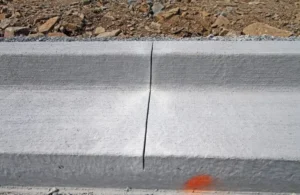
- Curb and Gutter Joints: The contraction joints for curbs and gutters are sawed or formed at 6-foot or 20-foot intervals with a minimum depth of 2 inches. Full-depth ¾-inch expansion joints are required at radius points, structures, and where new concrete curbs join existing concrete.
- Linear Foot Prices: When placing a municipal bid, the unit price per linear foot includes minor excavation, preparation of the base, forming, concrete, finishing, curing, tie bars, and backfill behind curbs.
WisDOT Section 602: Sidewalk, Driveway, and Curb Ramp Standards
Pedestrian sidewalks, driveways, and curb ramps must meet a variety of established standards provided by the Wisconsin Department of Transportation — and many aspects of concrete flatwork must meet ADA compliance standards. The WisDOT standards will govern thickness, slope, ADA accessibility ramps, Detectable Warning Fields (DWFs), and backfill.
- Thickness and Slope: WisDOT standards maintain that sidewalks must be 4 inches thick, and driveway aprons need to be 6 inches to 8 inches thick. The cross slopes on sidewalks and driveways cannot exceed 2.1% with a target of 1.5% to meet ADA standards.
- ADA Curb Ramps: To ensure that curb ramps meet ADA standards, WisDOT Section 602 caps the running slope at 8.3% and requires a 5-foot by 5-foot turning landing. Curb ramps that do not meet the standards may need to be torn out and replaced.
- Detectable Warning Fields: Detectable Warning Fields are textured surfaces that provide tactile cues for pedestrians with visual disabilities. WisDOT standards dictate there needs to be a 2-foot by 2-foot tactile panel that is bid on and paid separately per square foot.
- Backfill and Restoration: When forms have been removed and stripped, contractors must backfill the sidewalk edges with clean, compact soil, and dispose of any excess dirt. Topsoil, seed, and mulch are typically separate bid items.
WisDOT Section 501 and Section 716: Concrete Mix and Quality
WisDOT standards apply to more than just concrete construction design — they apply to the materials used and the quality of the finished product. WisDOT Section 501 sets the standard for the concrete mix and WisDOT Section 706 dictates quality control testing.
- Concrete Mix: WisDOT Section 501 dictates that all curbs and sidewalks must be Grade A concrete and lower-quality mixes cannot be used as a substitute under municipal guidelines.
- QMP Testing: WisDOT Section 716 highlights QMP testing for Class II Ancillary Concrete. Concrete contractors are often responsible for quality control testing that includes slump, air content, and compression strength. When bidding, contractors need to determine if they are responsible for testing or the municipality.
- Curing and Protection: WisDOT standards dictate that concrete sidewalks and curbs must be cured using a compound on the WisDOT Approved Products List, and cold-weather protection is incidental to the bid.
READ MORE: Sidewalk Design for 2027 – Accessibility, Safety, Drainage, and Durability
Do you have questions about how WisDOT standards impact concrete construction bids for municipal jobs? We may be able to answer your questions with this in-depth overview of the WisDOT standard specs for concrete curbs, gutters, and sidewalks with a plain-English guide for municipal bids.
Contact Potrykus Construction for more information on our concrete construction services!