

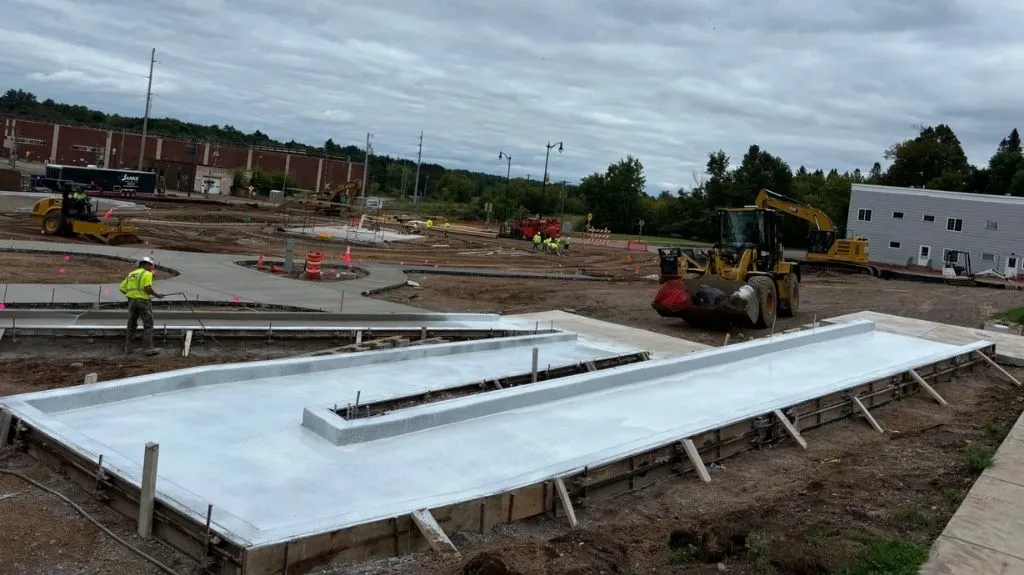
Businesses that install a concrete foundation or concrete flatwork need to understand the rules, regulations, and compliance standards that will impact the construction of their project. This can include Environmental Protection Agency (EPA) standards, building and structural codes, OSHA occupational health and safety requirements, and Americans with Disabilities Act (ADA) criteria. The owners of buildings that do not meet these standards may face penalties.
The Americans with Disabilities Act and the compliance standards it has established play an important role in the construction of commercial buildings where disabled individuals need to be able to access the building. This is important for businesses to consider when contracting concrete flatwork, and we hope that this overview of ADA compliance considerations for concrete flatwork will help.
4 ADA Compliance Standards for Concrete Flatwork
To ensure that your concrete flatwork is compliant with ADA standards, there are four basic rules that you need to understand and consider when you work with your construction company or contractor to design your property. These ADA guidelines govern concrete slopes, walkways, surface textures, and detectable warnings where pedestrian areas cross high-traffic areas. Having a better understanding of these standards can help guide and inform decisions for your concrete flatwork project.
READ MORE: What Are ADA Parking Lot Requirements?
Here is a closer look at each ADA compliance standard for concrete flatwork:
1. Slopes and Cross-Slopes — The 1:12 Rule
For individuals in wheelchairs or using walkers, slopes and cross-slopes can be dangerous — especially in poor weather or slippery conditions — making the slope a critical safety concern for concrete flatwork. The safety concerns here make the slopes and cross-slopes of a concrete pour a critical element that is always put under a microscope by ADA inspectors. Inspectors will often use digital levels and will fail a project if it exceeds the maximum slope by as little as 0.1%.
The parameters and standards for ADA compliance with sloped concrete flatwork ramps follow a basic 1:12 rule — that is 1 inch of vertical rise for every 12 inches of horizontal run — which translates to an 8.33% grade. With cross-slopes, the slope perpendicular to the direction of travel cannot exceed a 2.08% cross-slope or 1:48 ratio. With very specific parameters to consider and minimal room for error, many concrete construction companies aim for a sweet spot on cross-slopes that ranges from 1.5% to 1.8%.
2. Walkways and Sidewalks

To ensure that walkways and sidewalks are accessible, the ADA has established specific clearance and landing criteria for concrete flatwork. The minimum width for sidewalks and walkways under the ADA is 36 inches — but standard practice for public sidewalks is 48 – 60 inches to allow for additional clearance. When a sidewalk is less than 60 inches wide, it must have a 60” x 60” passing area for wheelchairs every 200 feet. In addition to those parameters, walkways need to have a 60-inch level landing area at the top or bottom of each run with a maximum 2% slope that is at least as wide as the ramp up to it.
3. Surface Textures and Joints
When it rains or snows, concrete flatwork can be slippery and dangerous — even more so for individuals in wheelchairs. To be ADA compliant, concrete flatwork must be stable, firm, and slip resistant. A medium-to-heavy broom finish is applied to most concrete surfaces to help improve traction, and more complex finishes may not be compliant if they cause additional vibrations for wheelchair users or get slippery when wet. Concrete flatwork must also adhere to strict ADA standards for lips and joints of concrete pads that create tripping hazards. Pads cannot have more than a ¼-inch vertical change without treatment, must be beveled if they are between a ¼ inch and a ½ inch, and require a ramp if the change exceeds ½ inch.
4. Pedestrian Crosswalk Detectable Warnings
When a pedestrian walkway crosses a road, driveway, or other vehicular area, the ADA compliance standards state that you must install detectable warning surfaces. This provides a visual and tactile warning for disabled persons and consists of small, raised domes with an established size, height, and spacing. These detectable earnings must extend the full width of the curb ramp, have a depth of 24 inches in the direction of travel, and must be a contrasting color to the concrete.
READ MORE: Slab vs. Deep Foundations Explained
Are you concerned about your crosswalks and sidewalks being compliant with ADA standards? We may be able to help at Potrykus Construction with this overview of ADA compliance considerations for concrete flatwork that will help you start on the right foot.
Contact Potrykus Construction today to learn more about our concrete flatwork services!