

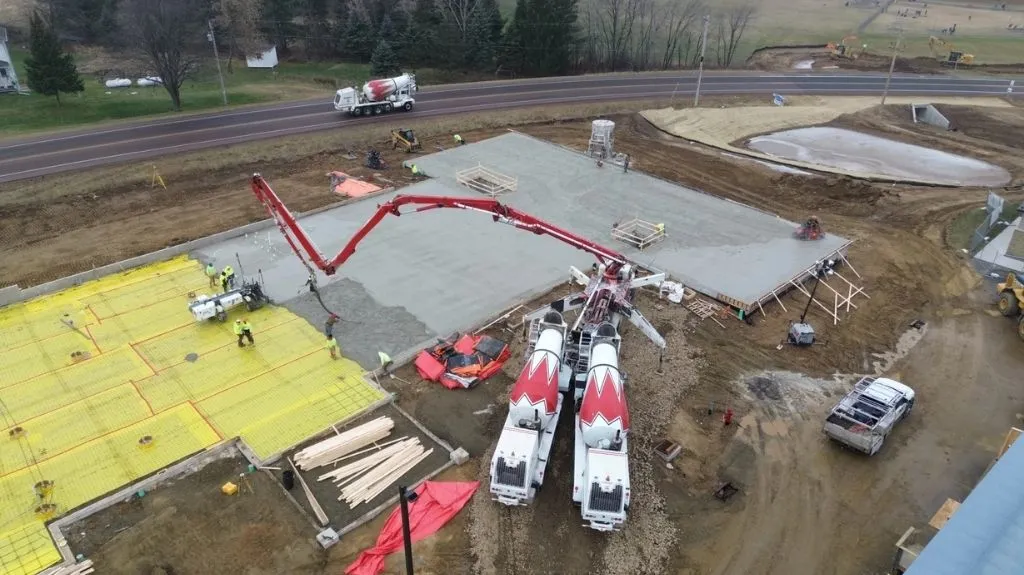
When you have a concrete construction project — whether it be concrete flatwork or a commercial building foundation — there are standards and regulations that need to be met. For Wisconsin property owners and construction companies, many of these standards are overseen by the Wisconsin Department of Transportation (WisDOT) and many concrete construction projects need to meet strict specifications. Here is a better look at how WisDOT standard specifications affect concrete construction projects provided by Potrykus Construction.
Guide to WisDOT Concrete Specifications and Requirements
The Wisconsin Department of Transportation provides construction companies and contractors with specifications and requirements that need to be met and followed for concrete projects. These specifications impact four primary aspects of concrete construction — the concrete mix and materials, placement and curing of the concrete, the quality of the concrete, and bidding and compliance for concrete construction projects.
Armed with this guide to WisDOT concrete specifications and requirements, you will gain a better understanding of the specifications that contractors must meet and how WisDOT looks at concrete construction projects.
READ MORE: ADA Compliance Considerations for Concrete Flatwork
1. Concrete Material and Mix Requirements
The mix of the concrete used for your project and the materials used in the mix have an impact on strength, durability, and longevity. These material and mix requirements provided by WisDOT include an approved products list, water-to-cement ratios, supplementary materials, and more.
- Approved Products List: Concrete construction companies are required by WisDOT specifications to use only Portland cement and admixtures from specific manufactures on the WisDOT Approved Products List.
- Water-to-Cement Ratio: The water-to-cement ratio in concrete impacts durability, strength, and permeability when it is formed. WisDOT mandates a maximum of 0.45 water-to-cement ratio.
- Supplementary Cementitious Materials (SCMs): Concrete mixtures are allowed to use fly ash and ground granulated blast-furnace slag in specific percentages. WisDOT regulations specify a maximum of 30% combined to improve workability and reduce the risk of cracking at high temperatures.
- Microfine Limits: Materials are subject to strict microfine testing in an effort to prevent structural cracking and they must meet WisDOT specifications.
2. Concrete Curing and Consolidation Requirements
How the concrete cures, is consolidated, and is placed on a jobsite is closely monitored by WisDOT and is restricted by WisDOT specifications. This helps ensure that the concrete will meet your needs and be strong enough to handle heavy loads.
- Water and Slump Restrictions: Slump is a measurement of the consistency and workability of concrete, and WisDOT restrictions limit the amount of water that contractors can add to the jobsite to increase slump. Additional water is only allowed if the maximum water-to-cement ratio is not met.
- Consolidation: All concrete must be mechanically consolidated to prevent segregation and voids around reinforcement elements. This is especially important with slip-form paving and structural barriers.
- Thermal Curing: Concrete projects must maintain a set moisture level and temperatures according to WisDOT restrictions, and contractors are required to use liquid membrane-forming curing compounds or thermal blankets to maintain these levels and prevent the concrete from drying out or freezing.
3. Quality Management Program and Testing Requirements
WisDOT standard specifications provide criteria for Quality Management Programs (QMP) and testing to help ensure that your concrete project meets all specifications and is built to last. These elements of WisDOT specifications involve trial batching and field acceptance.
- Trial Batching: This element of a Quality Management Program maintains that contractors must submit mix designs with trial batch data to prove that the concrete mix meets strength and flexibility criteria.
- Field Acceptance: When a concrete project involves structural and paving operations, contractors must evaluate strength and air content with checks performed on the site to ensure they are within acceptable limits.
4. Compliance and Bidding Requirements
The Wisconsin Department of Transportation monitors more than concrete strength and durability — it helps ensure that contractors remain compliant with all WisDOT specifications and that federal projects use American-made materials.
- Buy America – Origin Restrictions: The materials used for a concrete construction project must meet federal Buy America standards. This means that select materials must be sourced domestically for any jobs that use federal funds.
- Compliance Penalties and Rework: When concrete does not meet specified WisDOT standards and tolerances for air content or strength, it can be rejected. This means that contractors need to remove and rework the project.
READ MORE: What Property Owners Need to Know About Foundation Repair and Replacement
Do you have questions about how WisDOT standard specifications affect concrete construction projects? We hope that this overview created by Potrykus Construction has answered your questions and shed light on the criteria that concrete construction companies need to meet for each project.