

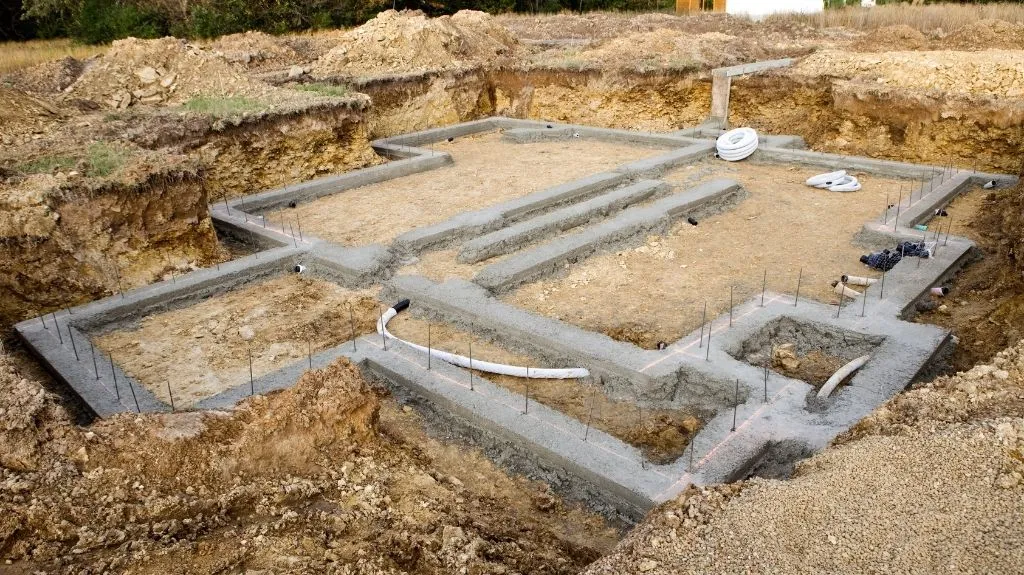
There are many elements of your concrete foundation that are critical to the strength and durability of your building’s foundation — and concrete footings are one of those elements. Business owners that want to know more about the construction of their property may have questions about what concrete footings are and why they are critical. We are here to answer your questions about concrete foundations and construction at Potrykus Construction.
Why Are Concrete Footings Important to Your Foundation?
Before you can understand why concrete footings are important to your foundation — it is important to define what concrete footings are and the purpose they serve.
The concrete footings employed by your foundation are reinforced concrete bases that are poured beneath a foundation to help distribute the weight of the structure across a wider area — like how snowshoes improve load distribution on snow. This helps create a more stable foundation for commercial buildings by improving load distribution, preventing uneven settling of concrete foundations, and enhancing structural stability.
3 Reasons Why Concrete Footings Are Important
There are multiple reasons why concrete footings are a critical element of a commercial foundation and we are here to help you better understand the importance of this construction element at Potrykus Construction.
1. Improves Load Distribution
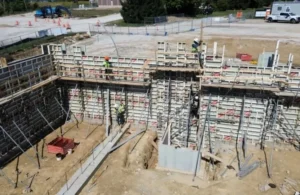
Like the snowshoes we mentioned earlier, concrete footings improve load distribution exponentially when you install a commercial concrete foundation. These footings spread the weight of walls, floors, and roofs across a larger area, reducing the weight of the structure on the ground below.
2. Prevents Uneven Settling
When a concrete foundation is installed directly on the ground, poor soil or drainage can lead to uneven settling that can contribute to cracks in your foundation. Concrete footings anchor the foundation of your building to hard, undisturbed soil, which prevents the foundation of your building from sinking at different rates on different sides.
3. Improves Foundation Stability
Extreme weather conditions in climates where freeze-and-thaw cycles are a factor can cause the ground beneath a concrete foundation to shift, lift, or crack a foundation — but proper concrete footings placed below the frost line can prevent these costly scenarios.
What Are the Different Types of Concrete Footings?
Armed with a better understanding of why concrete footings are important, you can take a closer look at the different types of concrete footings and how they are used to provide strength and support for the foundation of your property.
- Strip or Wall Footings: These concrete footings employ a continuous strip of concrete that runs below load-bearing walls to provide added strength and stability. Strip footings are common in homes or buildings with basements or crawl spaces.
- Spread Footings: A spread footing is a broader pad of concrete — typically in a T shape — that is employed by construction companies that need to spread out the weight of heavy loads concentrated on individual support columns.
- Trench Footings: Trench footings are a popular option in the construction of buildings that use slab or slab-on-grade concrete foundations. These footings incorporate a thick, solid layer of concrete poured into an excavated trench for strength and support.
READ MORE: How Poor Drainage Causes Structural Failure of Concrete Foundations
Do you have questions about the construction of your commercial building? You may be asking — what are concrete footings and why are they critical? We have the answers to your questions with this overview created by Potrykus Construction.
Contact Potrykus Construction today to learn more about our concrete flatwork services!