

The foundation of your home or business provides strength and stability for your construction project. A concrete foundation is the standard in most cases — but you may not realize that there are other types of foundations. When you make the decision to build a home or business, it is important that you understand the key differences between a concrete foundation and other foundation types to determine which is right for your project — and Potrykus Construction is here to help answer your questions.
What Are the Different Types of Foundations for Your Construction Project?
Builders past and present have used four primary types of foundations — poured concrete, concrete blocks, treated wood, and natural stone. Poured concrete slab foundations are used in an estimated 73% of construction projects, and 17% of projects possess a full or partial basement.
Natural stone foundations are the outlier in this comparison and have become much less common, being replaced by block and concrete foundations in the 1920s and 1930s. The increased use of poured concrete and concrete blocks for foundations reduced labor costs and reduced the amount of time it took to build a home or business. Natural stone foundations are still used for historic homes, eco-friendly construction projects, and for retaining walls.
Here is a better look at each different type of foundation:
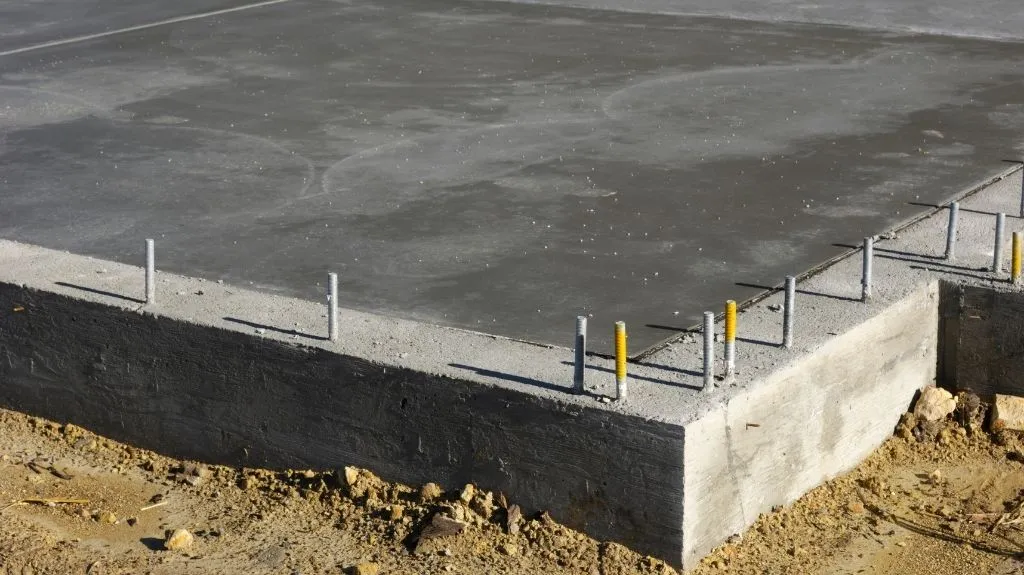
Poured Concrete Foundations
This is the standard for modern construction projects and involves liquid concrete poured into wood or metal forms and reinforced with steel rebar. When the concrete solidifies, it creates a continuous concrete foundation that is very resistant to water and external pressure. Poured concrete foundations may involve concrete slabs, full or partial basements, and crawl spaces.
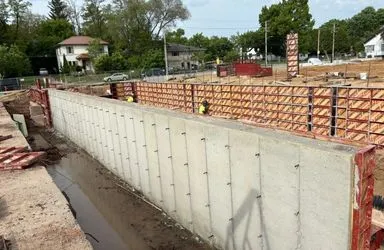
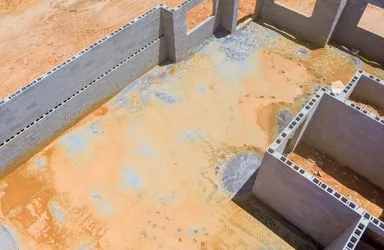
Concrete Block Foundations
A concrete block foundation uses hollow cinder blocks that are joined via mortar to create a continuous foundation. The vertical spaces of the cinder blocks are typically reinforced with steel rebar and filled with poured concrete or liquid grout to provide added strength. The seams of a concrete block foundation make these types of foundations more susceptible to water leaks and bowing.
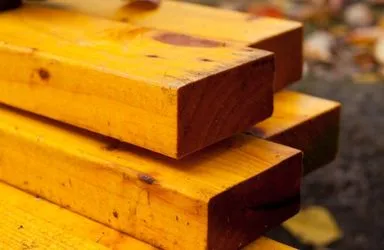
Treated Wood Foundations
Treated wood foundations — also known as Permanent Wood Foundations (PWF) — are less common in modern construction and are used primarily for smaller sheds, cabins, or smaller construction add-ons. Construction projects with a treated wood foundation use pressure-treated lumber with chemicals to prevent rot and insect damage, and instead of concrete footings, they employ crushed gravel to improve drainage. Treated wood foundations are more susceptible to water damage over time.
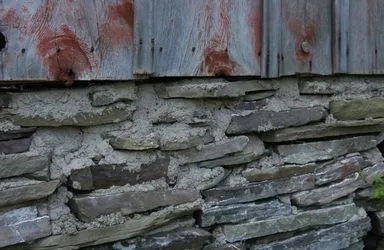
Natural Stone Foundations
Natural stone foundations are found primarily in older, historical homes that were built prior to World War II. A natural stone foundation employs fieldstone that is stacked and bonded with a lime-based mortar. These types of historical foundations can withstand tremendous weight, but are susceptible to water leaks and are designed to direct excess water to a floor drain.
Differences Between Concrete Foundations and Other Foundation Types
When you are starting a construction project, whether it be a brand-new home or a commercial business, it is important to understand the different types of foundations used in construction, and the pros and cons of each type. Key areas where these different types of foundations will set themselves apart include costs, labor time, and more.
| Foundation Type | Estimated Cost | Labor Time | Key Strengths | Key Weaknesses | Best Used For |
|---|---|---|---|---|---|
| Poured Concrete | High$15 – $30 Per Square Foot | 1–4 Days to Prep and PourAdditional 7–14 Days to Cure | Seamless, highly waterproof, handles lateral soil pressure well. | Requires heavy pump truck access; difficult to repair major cracks. | Modern basements, high water tables, heavy structural loads. |
| Concrete Block (CMU) | Medium$12 – $20 Per Square Foot | 2 – 3 Weeks | High vertical strength; easy to transport materials to tight sites. | Mortar joints are prone to leaks and inward bowing over time. | Inaccessible job sites, home additions, experienced DIYers. |
| Treated Wood (PWF) | Low$10 – $15 Per Square Foot | 2 – 4 Days | Warmer, easy to insulate and finish, can build in freezing weather. | Highly vulnerable to rot and insects if exterior drainage fails. | Cold-weather construction, remote builds, energy-efficient designs. |
| Natural Stone | Very High$30 – $50+ Per Square Foot | 4 – 6+ Weeks | Extremely durable over centuries; handles immense vertical weight. | Not naturally waterproof; lime mortar requires periodic repointing. | Historical restorations, high-budget aesthetic projects. |
READ MORE: Foundation Repair vs. Foundation Replacement
If you are planning to build a home or business, you may be looking at the differences of concrete foundations vs. other types of foundations, and trying to determine which is best for you. We hope this quick comparison created by Potrykus Construction has helped you find the right fit for your construction project.